Parent Guide
English
Free
Learning Disabilities
children with learning disabilities (LD) requires an understanding of the unique challenges they face, as well as strategies to support their academic and social development. Learning disabilities are neurological disorders that affect a child's ability to acquire, process, or communicate information, even though their intelligence is typically within the normal range. Common LDs include dyslexia (difficulty reading), dysgraphia (difficulty writing), dyscalculia (difficulty with math), and attention disorders such as ADHD.
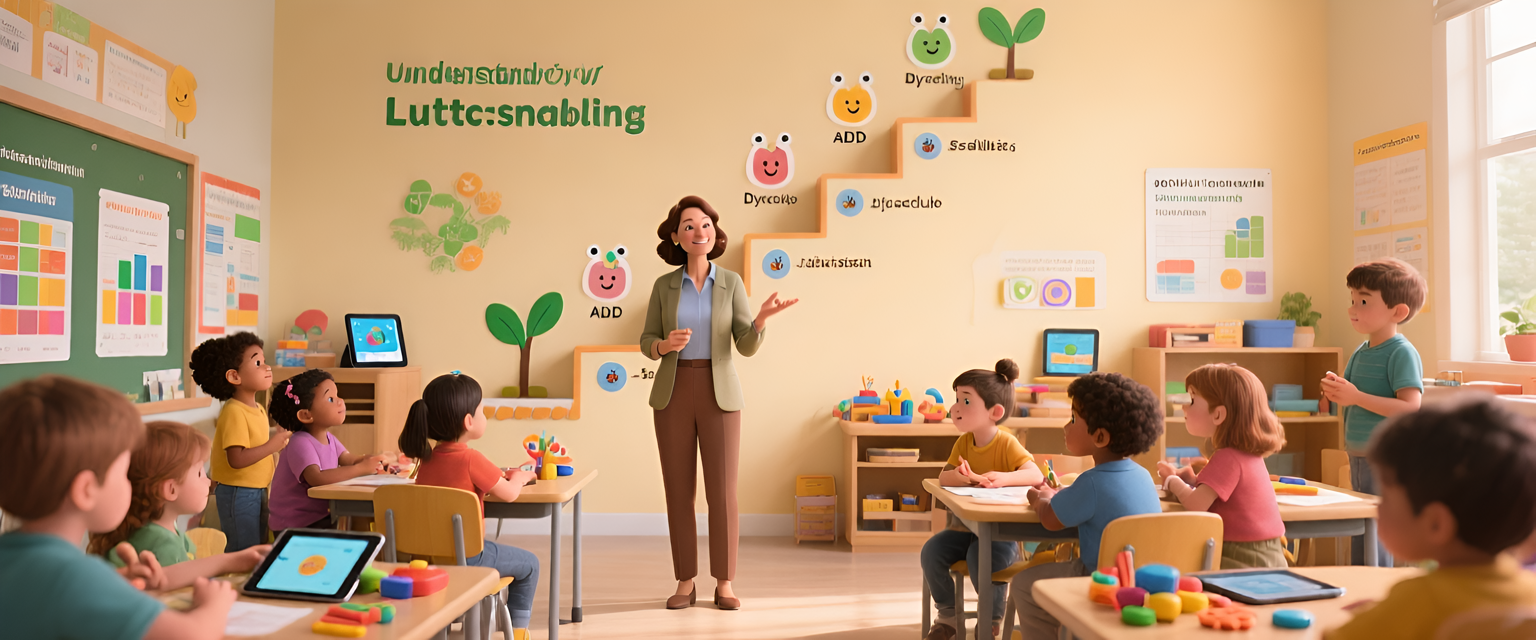
Children with LD often experience difficulty in one or more of the following areas:
Reading and comprehension (Dyslexia)
Written expression and organization (Dysgraphia)
Numerical and arithmetic skills (Dyscalculia)
Sustained attention and impulse control (ADHD)
The causes of LD are multifactorial, including neurological differences, genetic predisposition, and environmental factors such as insufficient early stimulation or prenatal complications. Early identification and assessment by educational psychologists or specialists are essential for providing effective intervention.
Teaching Strategies
1. Individualized Education Programs (IEPs)
Developing an IEP tailored to the child's strengths and weaknesses ensures that learning objectives are realistic and measurable. These programs often include specialized teaching methods, accommodations, and regular monitoring.
Reading and comprehension (Dyslexia)
Written expression and organization (Dysgraphia)
Numerical and arithmetic skills (Dyscalculia)
Sustained attention and impulse control (ADHD)
The causes of LD are multifactorial, including neurological differences, genetic predisposition, and environmental factors such as insufficient early stimulation or prenatal complications. Early identification and assessment by educational psychologists or specialists are essential for providing effective intervention.
Teaching Strategies
1. Individualized Education Programs (IEPs)
Developing an IEP tailored to the child's strengths and weaknesses ensures that learning objectives are realistic and measurable. These programs often include specialized teaching methods, accommodations, and regular monitoring.